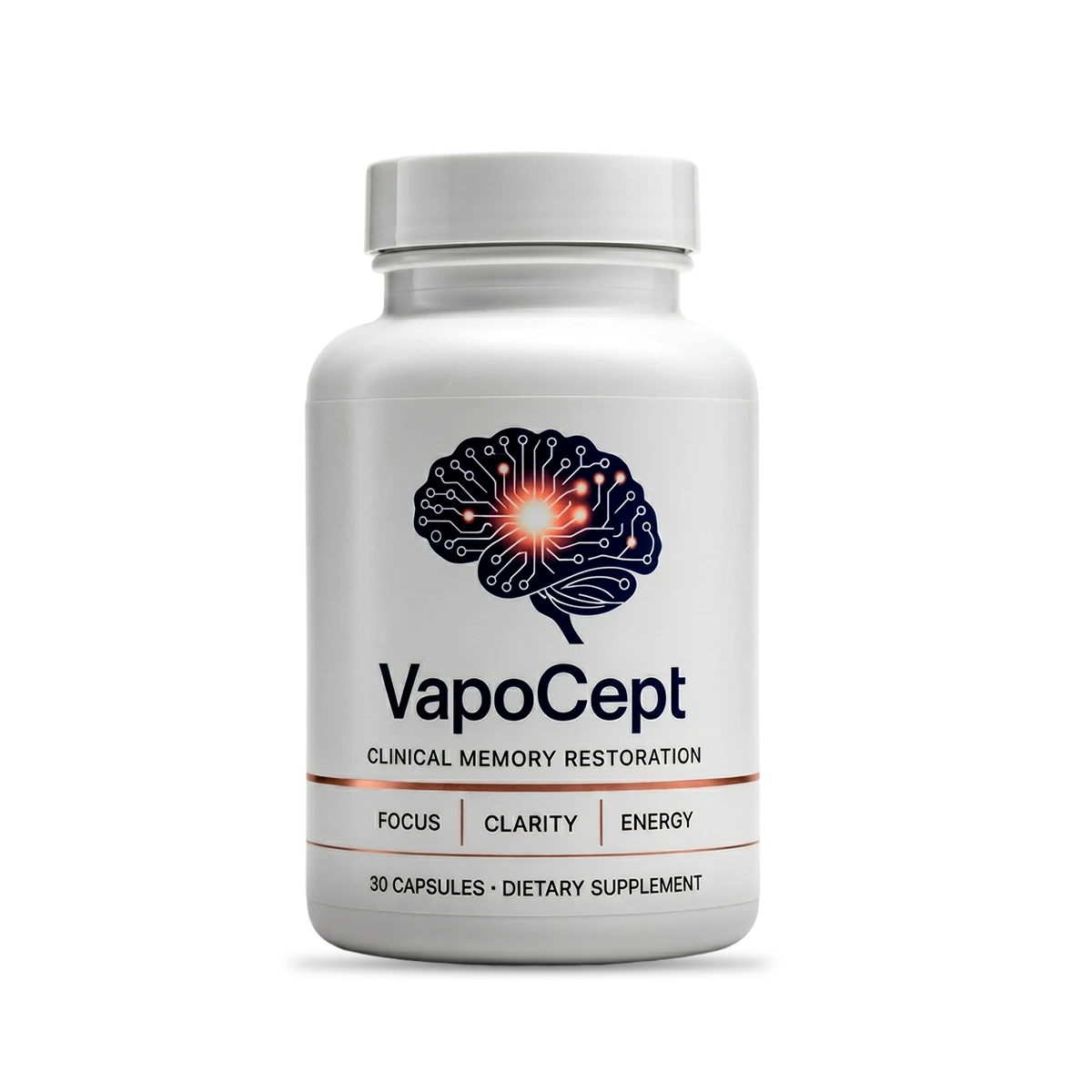
A formula is a story a brand tells. A label is a finite list, and the difference matters: a list has a bottom, and everything above it has to be explained — including whatever was left off the front of the box.
Six actives sit on this panel, with three further ingredients below them. The order used here is the weight of cognitive evidence behind each, which puts the least flattering entries last rather than hiding them.
The Four Carrying the Research
VapoCept Ginkgo Biloba
The ingredient with the most direct memory evidence here, and the only one tested on something resembling ordinary life. Phytomedicine carried the study in 2011. Participants were 188 healthy adults between 45 and 56; the dose was 240 mg of a standardized extract once a day; the period was six weeks. Against placebo, appointment recall came out ahead both immediately (p = 0.038) and, more convincingly, after a delay (p = 0.008).
Recognition memory showed no advantage. The paper reports that plainly and so do we — the benefit was narrow rather than general, which is what an honest reading of it supports.
Ginkgo is also the ingredient with the interaction worth knowing. It has documented relevance to blood thinners such as warfarin and to antiplatelet medication, and it is usually stopped ahead of scheduled surgery.
VapoCept Marigold Extract, VapoCept Lutein
Marigold flowers are the commercial source of lutein and zeaxanthin, two carotenoids that accumulate in brain tissue as well as in the retina. Frontiers in Aging Neuroscience published the relevant work in 2017: a full year of 12 mg a day, 51 participants who completed it, average age 73.7. Complex attention separated from placebo at p < 0.02 and cognitive flexibility at p < 0.04.
A twelve-month trial in adults averaging seventy-three is unusually relevant to anyone actually buying a memory supplement. It is also a small sample, which belongs in the same sentence.
VapoCept Green Tea Extract
Supplies EGCG, among the more studied plant antioxidants, and a small amount of L-theanine — the amino acid associated with calm alertness rather than stimulation. Its best-known cognitive result came from a crossover study pairing it with caffeine, which found gains in task-switching accuracy and in how alert people reported feeling.
The caveat we will state rather than bury: that trial used a specific combination at specific doses, and a green tea extract inside a six-ingredient capsule is not the same thing. Green tea extract is also where the trace of naturally occurring caffeine comes from, which is why mornings are the sensible time to take this.
VapoCept Turmeric Extract
Curcumin's source, and the most patiently studied thing on the panel. The American Journal of Geriatric Psychiatry published it in 2018: eighteen months of follow-up, 40 participants between 51 and 84, none carrying a dementia diagnosis. Two caveats travel with that result — forty is a small number, and the curcumin was a preparation built for absorption rather than the spice.
The Two for Nutritional Foundation
Here is where we part company with most pages selling this product.
VapoCept Bamboo Extract
A plant source of silica, the mineral associated with connective tissue, hair, skin and nails. A sensible nutritional inclusion. It is not a memory ingredient and we are not going to call it one.
VapoCept D-Glucosamine
A naturally occurring amino sugar, familiar mostly from joint supplements, with a long record of use and good tolerability. Its research base in joint health is substantial. In cognition it is not, and positioning it as a memory ingredient would be a stretch the evidence does not support. It belongs to the formula's nutritional foundation.
The Three Other Ingredients
- Bovine gelatin capsule. The shell comes from cattle, which rules the product out on vegetarian, vegan, halal and kosher grounds alike. Better read now than worked out from the packaging later.
- Magnesium stearate. A standard flow agent that stops powder sticking during encapsulation, present in a large share of capsules on the market.
- Microcrystalline cellulose. Purified plant fiber used as a bulking agent so each capsule fills consistently.
Inside the VapoCept® Formula: the Same Six Under Other Names
Each of these actives is sold on its own under half a dozen phrasings, and knowing they describe the same material saves a lot of comparison-shopping confusion.
Ginkgo
A Ginkgo Biloba memory supplement, Ginkgo Biloba for memory support, Ginkgo Biloba for cognitive support, Ginkgo Biloba for focus, Ginkgo Biloba for mental alertness, Ginkgo Biloba for healthy aging — six headings, one plant extract underneath all of them. The trial evidence sits squarely under the first two, and a Ginkgo Biloba brain supplement is what that ingredient makes this formula in the usual sense of the term. Ginkgo Biloba circulation support is the framing most often overstated, and a best Ginkgo Biloba supplement comparison that ignores standardization is comparing different products.
Turmeric
A turmeric brain health supplement, a turmeric memory supplement, turmeric for brain health and turmeric for healthy aging all point at curcumin rather than at turmeric powder. Turmeric antioxidant support is the better-established framing; a curcumin brain health supplement, turmeric cognitive support and curcumin cognitive support all rest on one eighteen-month trial in forty people using an absorption-enhanced preparation.
Marigold and lutein
A marigold extract supplement is a lutein supplement under another name, and marigold extract brain health, a marigold lutein supplement and a lutein brain health supplement all describe the same material. Lutein cognitive support has that single twelve-month trial behind it, which makes lutein and healthy brain aging a reasonable association rather than a proven one. Lutein antioxidant support is the broader and safer claim. A lutein supplement for seniors is simply the same ingredient sold to the group it was actually studied in.
Green tea
A green tea extract supplement, green tea extract brain health, green tea extract cognitive support and green tea extract mental alertness are four names for a single extract. Green tea antioxidants for brain health, and an EGCG brain health supplement, point instead at the compound it carries, and EGCG antioxidant support is the claim that stands up best.
Bamboo and glucosamine
A bamboo extract supplement and a bamboo silica supplement are the same thing — a silica supplement for healthy aging, sold for structural tissue rather than cognition — bamboo extract benefits are generally described in terms of hair, skin, nails and connective tissue. D-Glucosamine supplement benefits are documented largely in joint health, and as a D-Glucosamine Sulfate supplement it belongs to this formula's nutritional foundation.
Why Two Different Ingredient Lists Are Circulating
If you have searched this product you may have run into an older list built around amino acids — arginine, citrulline, beta-alanine — rather than plant extracts. That list does not match the current label.
This is not unusual or sinister. Supplement formulas get reformulated, and what does not get updated is the long tail of affiliate pages, review sites and marketplace listings describing the previous version. Those pages keep ranking, which is how a superseded ingredient list outlives the product it described.
There is one rule that resolves all of it: whatever is printed on the panel of your own bottle wins. Websites go stale and copy each other; a label does not. Should the bottle disagree with what you were shown before ordering, you are owed a refund — and sixty days makes that an easy conversation to have.
Several closely related searches arrive at this page and they all resolve the same way. Has the VapoCept formula changed? Which VapoCept formula is correct? What is in VapoCept, and what are the VapoCept real ingredients? Why do the VapoCept updated ingredients on one site not match another?
The answer in every case is the list above — the VapoCept six-ingredient formula, or the VapoCept Ginkgo formula if you want a shorthand for it. Any VapoCept formula comparison putting the two lists side by side is comparing a current label against an outdated write-up rather than two live products, and VapoCept ingredient confusion is what that produces.
Searches for a VapoCept label review, the VapoCept bottle label, the VapoCept current supplement facts or a VapoCept formula review all come down to one question: what is really in the bottle. So does the VapoCept vs MemoCept comparison, which comes up often enough to be worth a line — MemoCept vs VapoCept is a comparison of two differently named products, not of two versions of one.
Reading Any Supplement Label in About a Minute
- Look for a figure beside each active rather than one total covering several. Where they are bracketed into a blend, the split is withheld — and a withheld split means the contents are unknown to you.
- Read the extract name and standardization. A standardized extract at a stated percentage is a different purchase from an unqualified herb name.
- Scan the other-ingredients line. Capsule material is declared there, and it is where a vegetarian discovers gelatin — usually after the parcel has arrived.
- Hold the daily amount up against the dose in whatever trial the seller is quoting. A tenth of the studied dose is not a smaller version of the study; it is a different proposition.